
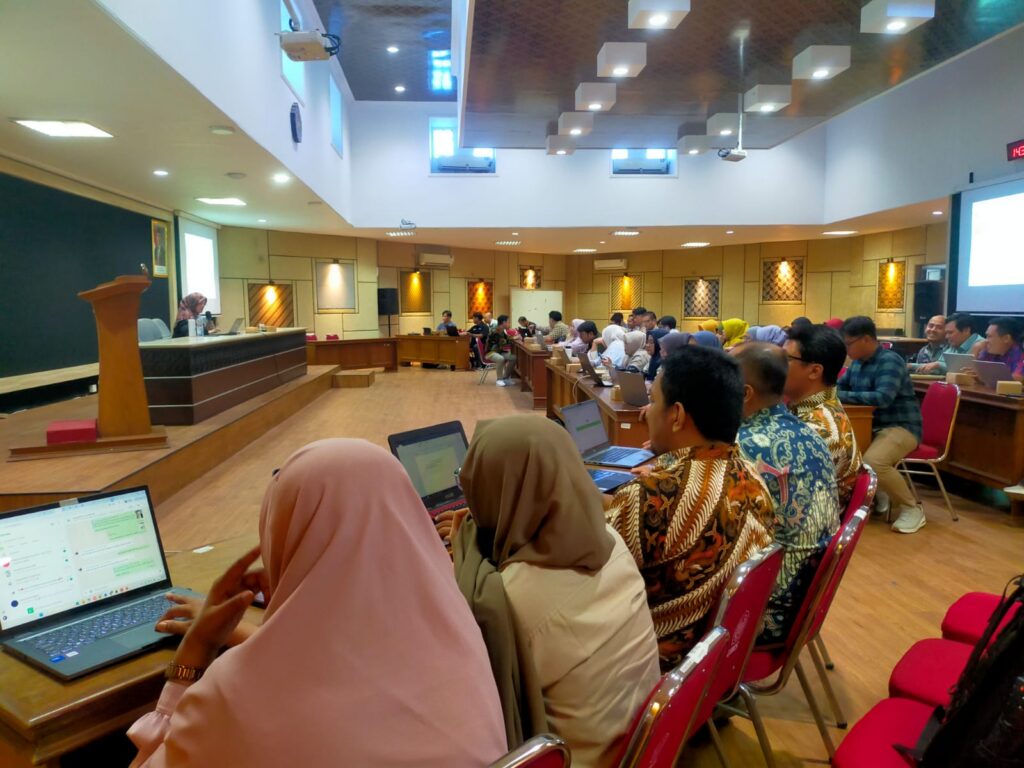
The curriculum revitalization process at Universitas Muhammadiyah Surakarta (UMS) was formally coordinated at the faculty and UPPS level through a dedicated workshop held on 9 December 2025. The activity featured Dr. Laili Etika Rahmawati, S.Pd., M.Pd., Head of Curriculum Development and Learning Innovation at BIP UMS, as the keynote resource person.
The session provided comprehensive guidance on the principles, structure, and procedures of curriculum revitalization in line with institutional policies and national standards. Several key points were emphasized during the discussion.
First, the total credit load of the curriculum is set at 146–148 credits, which already includes compulsory courses on life skills and digital literacy. To ensure a balanced academic workload, students are expected to take a maximum of 20 credits in the first and second semesters, with the digital literacy course positioned in Semester 2.
In terms of curriculum development, the workshop highlighted the importance of involving both internal and external stakeholders, including academic staff, students, alumni, and professional partners, to ensure the relevance and impact of the revised curriculum.
The revitalization process also requires a clearly documented evaluation stage, detailing timelines, procedures, and activities, supported by systematic explanations and official documentation. In addition, tracer studies were identified as a crucial component to provide empirical evidence that supports curriculum revision and alignment with graduate outcomes.
Participants were also reminded that the University’s vision and mission serve as the main reference for curriculum development and can be accessed through the institutional strategic plan (Renstra).
Overall, the workshop reinforced UMS’s commitment to implementing a structured, evidence-based, and stakeholder-oriented curriculum revitalization process to enhance the quality and relevance of academic programs, including those within the Department of English Education (DEE).